Full overlap boxes
A full overlap box is an RSC with longer outer flaps. Instead of meeting in the middle, each major flap reaches the far side of the box, so the top and bottom are two full layers of board. Buyers call it an FOL.
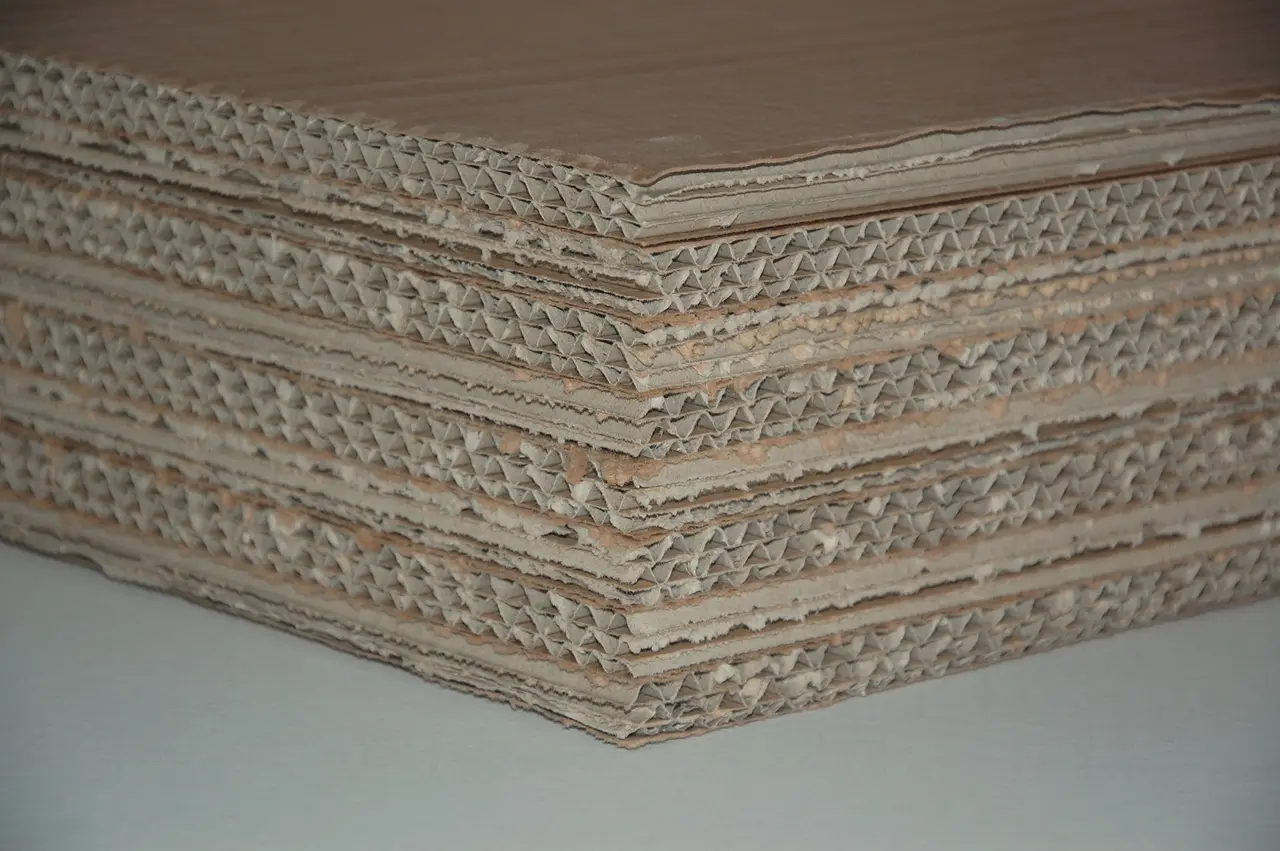
| Style | Full overlap container (FOL) |
|---|---|
| Flaps | Major flaps the full width of the box, overlapping each other completely |
| Benefit | Extra stacking strength and edge protection at top and bottom |
| Board | Usually single or double wall; specified by ECT or burst test |
| Uses | Long items, heavy items, items that rest on their ends, rough handling |
Where the extra board earns its keep
The extra flap length costs board, so an FOL is worth it only when the top and bottom take real punishment. Rolls of material, long tools, rods and parts that stand on end press their weight into a small area of the bottom panel; on an RSC that area may fall on the single-layer part of the flap. With full overlap there is no thin spot.
Full overlap boxes also take forklift and clamp handling better at the faces, and give a solid surface to staple or tape through. Pallet loads of FOLs are common in heavy manufacturing and service-parts distribution.
Measuring an FOL
Order an FOL the same way as any RSC: inside length, width and depth, measured at the opening. The flap length follows from the width, so there is nothing extra to specify. If the box is unusually narrow and long, tell us; very long overlap flaps on a narrow box can be awkward to close by hand.
Sizing an FOL
Because each outer flap equals the box width, a very wide FOL has very long flaps, which take more board and can droop before they are closed. Most FOLs are narrower than they are long. If your product is close to square, an RSC with a pad inside the top and bottom may give similar protection for less board; we can price both.
Tape, glue and staples on an FOL
With both outer flaps covering the whole face, an FOL can be sealed by stapling or stitching through the overlap, which is how many heavy industrial cartons are closed. Tape across the edge seams still helps. Hot-melt glue works too, applied between the overlapping flaps on a case sealer adjusted for the extra length.
Common uses we quote
Machined shafts and rods, rolled carpet and flooring, curtain rails, lighting tubes, hand tools packed in sets, small engines and pumps, bagged powders laid flat, and glassware separated by partitions. In each case the deciding factor is weight concentrated on a small area of the top or bottom panel, which an ordinary RSC handles less well.
When to choose it
- Long, narrow goods such as tubes, rods or rolled stock.
- Heavy parts that sit on one end inside the box.
- Boxes that are stapled shut or handled with clamps.
- When the load is light and square, a standard RSC saves the board.
Request this box: a full overlap carton
Give the inside size, the board if you know it, the count and your ZIP. Say it is for full overlap boxes in the notes, and we quote it delivered.
- Inside size
- length x width x depth, in inches
- Style
- RSC, full overlap, telescope, die-cut or bulk
- Wall and grade
- read it off the stamp on your current box
- Count
- boxes per order, and how often you reorder
- Packed weight
- box plus contents
- ZIP
- where the boxes are delivered
After you send it
- We reply by email, usually with questions first if anything is unclear
- You confirm the specification, and a sample or drawing if it is a new design
- We send the price, the delivery window and the count tolerance
- On approval the order is scheduled and shipped to your dock