Telescope boxes and half slotted containers
A half slotted container has flaps on one end only and an open top. Put a second, slightly larger one over it upside down and you have a telescope box: a base and a lid. Full telescope lids cover the whole depth; partial ones cover part of it.
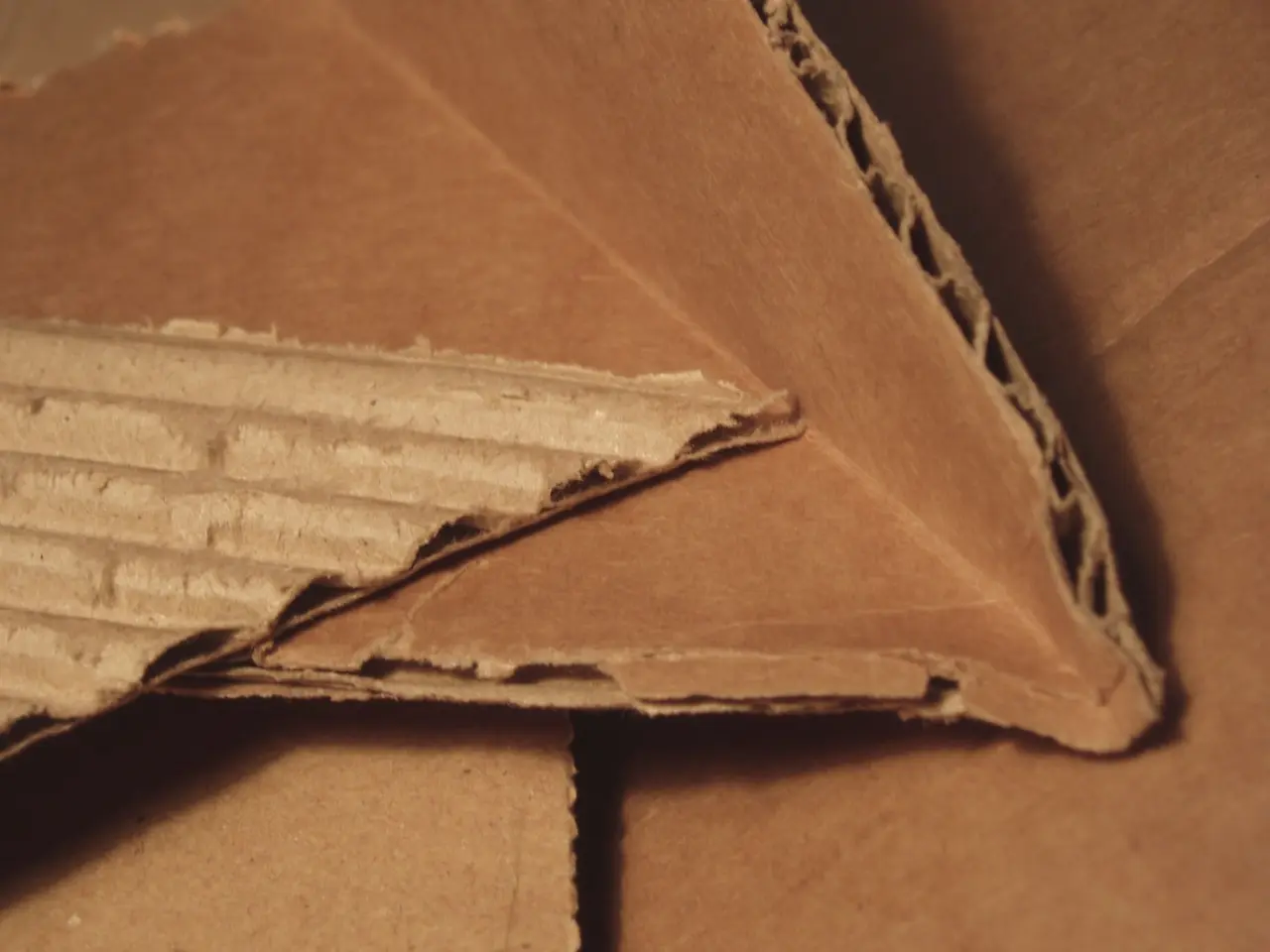
| Half slotted (HSC) | One set of flaps, open top |
|---|---|
| Full telescope | Lid slides over the full depth of the base |
| Partial telescope | Lid covers part of the depth; the rest of the base shows |
| Board | Single wall for trays and produce; double or triple wall for pallet-size bulk |
| Uses | Produce, files and records, large and heavy goods, bulk containers |
Why two pieces
A telescope box has double walls all the way round wherever the lid overlaps the base. That makes it stiff for its weight, which is why the format is used for large boxes and for pallet-size bulk containers. It also opens without a knife: lift the lid, and the contents are there. Records storage, produce, appliances and machine parts all use it.
An HSC on its own is the open tray seen in packing sheds and on store shelves. A taller HSC with a separate cap is a simple way to box something that has to be loaded from above, by a crane or a hoist.
What to tell us
Give the inside size of the base. Say whether the lid should cover the full depth or only part, and how much. If the box is pallet-size, say so and give the footprint; we will point you to the bulk box page and the board it needs.
Sizing lids
A lid has to slip over the base without binding, so its inside dimensions are slightly larger than the outside of the base. The difference depends on the board thickness. Give us the base size and we work out the lid; that avoids the common mistake of ordering both pieces at the same nominal size.
Bliss boxes and other alternatives
For very heavy or tall loads, a bliss box, made from a body wrapped around two end panels, gives stiff corners and a strong bottom. A five-panel folder suits long, slim items such as blinds or rods. Both appear on quote requests that began as telescope enquiries, and either can be the better fit once the product is known.
Choosing the overlap
A full telescope lid covering the entire depth doubles the walls from top to bottom and gives the most stacking strength. A partial lid uses less board and is easier to lift off; it suits lighter goods and trays that are opened often. For tall products, a five-panel folder or a separate tube with two caps may be easier to pack; ask if your product is long and narrow.
Produce and storage boxes
In fresh produce, half slotted trays with ventilation holes and a separate cover, or a single-piece telescope, are standard because cold air must circulate through stacked cartons. In records storage, a telescope box with handholds lets people lift the lid without tearing it. Vents and handholds are cut on the die; mention them on the quote.
When to choose it
- Contents loaded from above or inspected often: HSC with a lid.
- Large, heavy or pallet-size goods: full telescope in double or triple wall.
- Fruit and vegetables: HSC trays or telescope cartons, vented.
Request this box: a telescope or half slotted box
Give the inside size, the board if you know it, the count and your ZIP. Say it is for telescope boxes and half slotted containers in the notes, and we quote it delivered.
- Inside size
- length x width x depth, in inches
- Style
- RSC, full overlap, telescope, die-cut or bulk
- Wall and grade
- read it off the stamp on your current box
- Count
- boxes per order, and how often you reorder
- Packed weight
- box plus contents
- ZIP
- where the boxes are delivered
After you send it
- We reply by email, usually with questions first if anything is unclear
- You confirm the specification, and a sample or drawing if it is a new design
- We send the price, the delivery window and the count tolerance
- On approval the order is scheduled and shipped to your dock