Flute types and sizes
The flute is the wavy sheet glued between the liners of corrugated board. Flutes are named by letter, and they differ in height and in how many waves fit in a foot: A is the tallest of the common ones, F the finest.1
| Flute | Flutes per foot | Thickness |
|---|---|---|
| A | 33 ± 3 | 3/16 in |
| B | 47 ± 3 | 1/8 in |
| C | 39 ± 3 | 5/32 in |
| E | 90 ± 4 | 1/16 in |
| F | 125 ± 4 | 1/32 in |
From the Wikipedia article on corrugated fiberboard.
Why the letters are out of order
A, B and C were named in the order they were introduced, not by size, which is why C sits between A and B in thickness. E and F came later, for thinner board used in retail and mailer boxes.
What each flute is good for
Taller flutes give more cushioning and more stacking strength for their weight, because the board is thicker and stiffer. Finer flutes give a flatter, smoother face that prints well, fold more tightly around small panels and resist crushing from the face.
C flute is the most common choice for single wall shipping cartons: a balance of stacking strength and cushion. B flute is thinner and tougher against puncture, used for smaller boxes, cans and heavy goods packed tight, and for die-cut trays. E flute shows up in mailers and retail boxes, where a crisp fold and a good print surface matter more than stacking. A flute is less common today but still used where cushioning counts.
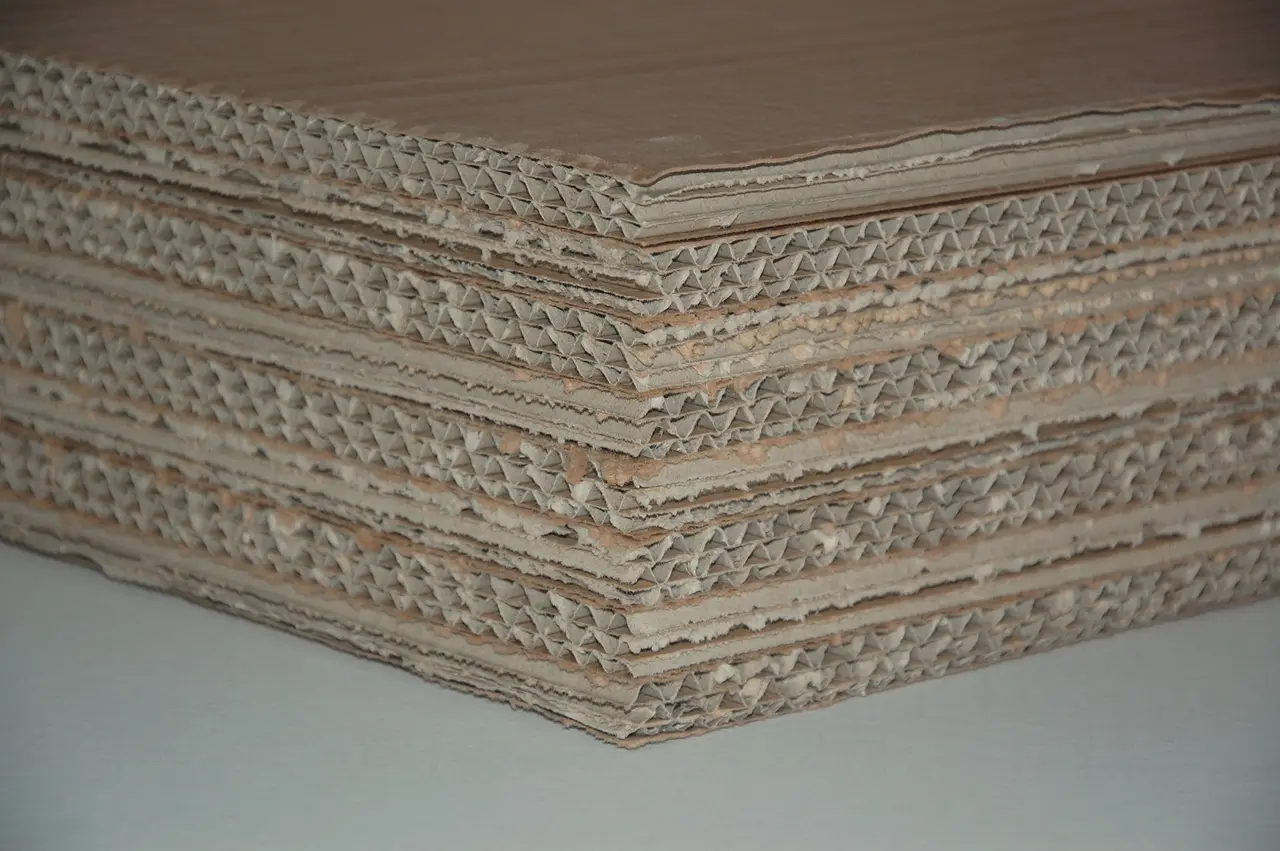
Double and triple wall combinations
Double wall board combines two flutes with three liners, and the usual pairing is BC: one B and one C. Triple wall uses three flutes between four liners, seven layers of paper in all, often in combinations that include A or C.2 The combination is chosen for the load, and it is printed on the spec rather than on the certificate.
Do you need to choose?
Usually not. Tell us the box, the packed weight and how it ships, and the flute follows from the grade. If you have a reason to want a particular flute, such as a die-cut that must fold tightly or a print that must be sharp, put it in the notes on your quote and we will quote that board.
Caliper and why it matters
Caliper is the board's thickness, measured precisely with a gauge. It drops if flutes are crushed in conversion or handling, and lower caliper means lower stacking strength. Good plants check it routinely. Buyers rarely need to, but a visibly flattened sheet edge is a warning sign. So is board that feels spongy when squeezed between finger and thumb, or warped bundles straight off the truck.
Choosing flute for mailers and cases
For a lightweight subscription mailer that must look crisp, E flute with a white outer liner is the classic choice. For a 20 lb case of canned goods stacked on pallets, C flute single wall usually wins. For a heavy, dense parcel that will be thrown, B flute or a BC double wall resists punctures best. Your supplier should suggest one; if two are plausible, compare samples.
Flutes in other products
Corrugated is not only for boxes. Single-face board, a liner with one fluted medium and no second liner, is sold in rolls as a flexible wrap for furniture legs, pipes and glass. Corrugated pads and partitions use the same flutes as boxes. Displays in shops, dump bins and shelf trays are often made from E or B flute with white-top liners for print. Heavy triple wall is used for pallets and pallet skirts in some export applications.
Flute direction and strength
Flutes run vertically in the side panels of a normal shipping box, like columns, which is what gives the box its stacking strength. Boxes made with flutes running horizontally are weaker in compression and usually only used for special purposes. If you ever cut your own boxes from sheet, keep the flutes upright.
Board strength is also lost wherever the flutes are crushed, by tight strapping, rough clamps or careless stacking. Crushed flutes cannot recover.
Reading flute from a sample
Look at a cut edge of the board. Count the arches over a measured inch and compare with the table: around three per inch is A, around four is B or C, seven or eight is E. Measure the thickness with a rule or caliper. Double wall shows two rows of arches and triple wall three. A worn sample may be crushed thinner than when new, so read the certificate or a spec sheet if one exists.
Some plants also make microflutes thinner than F, and a few produce very large flutes for special cushioning uses. Those are unusual in shipping boxes. If your current supplier quotes a flute code you do not recognise, ask for its height and count per foot.
Flute and stacking
Flute height affects compression strength, the box's resistance to being squashed when stacked. Taller flutes stand up better, so C flute boxes are a common choice for stacking. Smaller flutes resist crushing flat better and pack more boxes into a bundle. Plants balance these with liner weights to meet the rating.
Print and appearance
Finer flutes give a flatter surface, so print looks sharper and less "washboarded" on E and F flute. Retail boxes, mailers and gift packaging often use them for that reason. On shipping cartons with simple one-colour marks, B or C flute is usually fine.