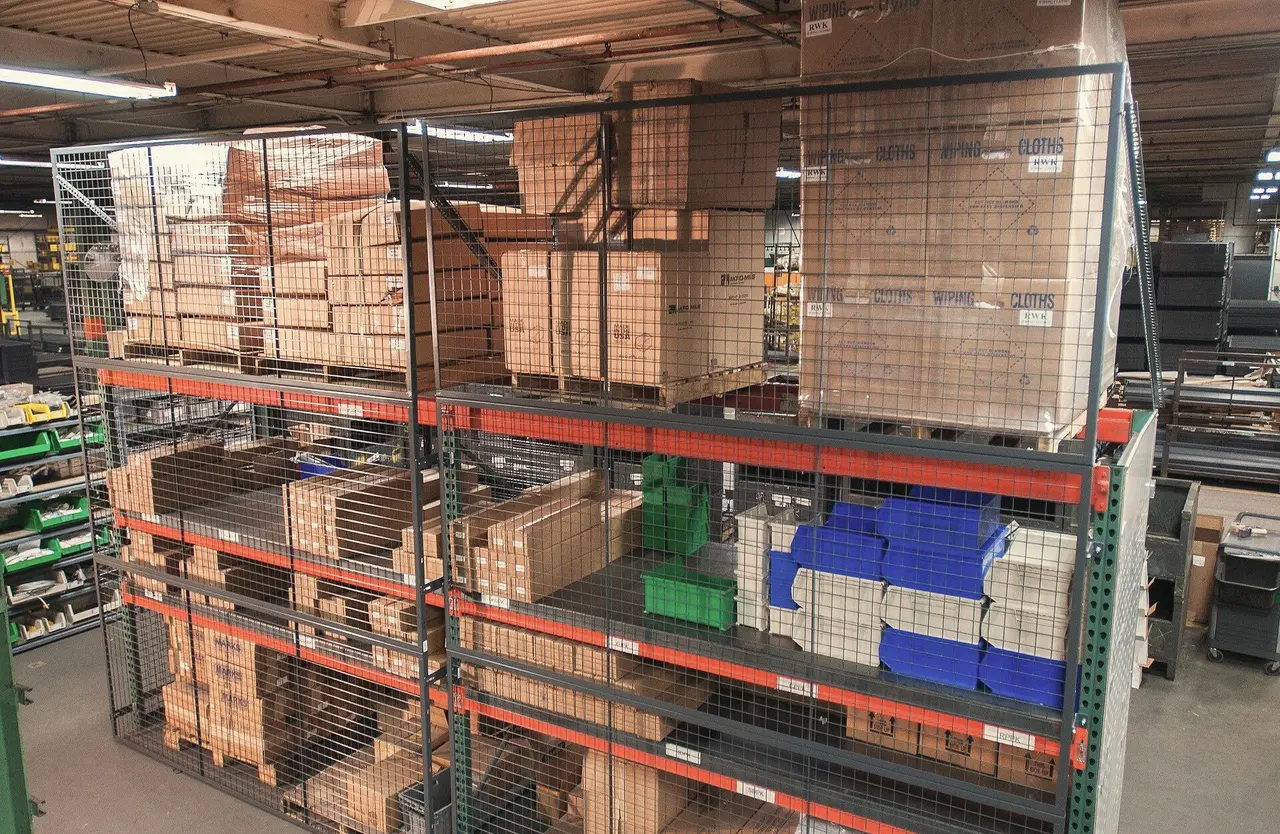
Corrugated boxes for automotive parts makers
Automotive parts move in two very different boxes: heavy cartons and bulk boxes that carry parts between plants, and small, dense service cartons that carry one part to a dealer or repair shop. We quote both, sized to the part.
What gets packed, and how it travels
Stampings, castings and fasteners in double wall or bulk boxes; filters, sensors, brake components and gaskets in small RSCs; long parts such as trim and exhaust in telescope boxes. Motor vehicle parts manufacturing employed 521,212 people in 2025; Michigan alone counted 111,465, followed by Ohio, Indiana, Tennessee and Kentucky.
Parts are heavy for their size. A small box of metal parts can reach the rating of single wall board long before it looks full.
Where the wrong box goes wrong
Dense parts punch through panels and burst seams; sharp edges cut the liner. A service carton that is rated only for stacking can fail in parcel handling. For heavy small boxes, the burst-rated 200# test or a step to double wall is often the answer, and for loose parts between plants a pallet-size bulk box replaces dozens of small cartons.
Expendable packaging
Returnable plastic containers carry many parts between plants, but expendable corrugated packaging is still used for export, aftermarket and service parts, low-volume components and anything shipped to a dealer. Partitions keep painted and machined surfaces apart. Layer pads protect tiers. Bulk boxes on pallets carry loose components. We quote each to the part and its count.
Aftermarket parts are sold through distributors and online, so their cartons need labels, barcodes and enough strength to survive parcel networks as well as pallets. Heavy items such as brake rotors, batteries and starters need double wall or a die-cut insert. Light trim pieces may need long boxes and pads.
Questions buyers ask
- Can boxes have partitions for small parts?
- Yes, partitions and die-cut inserts can be quoted. Send the part size and how many per box.
- Do you quote returnable packaging?
- No. We quote new corrugated boxes. For one-way shipments and service parts, corrugated is usually the choice.
- What should we send for a quote?
- Inside dimensions, style, grade or packed weight, count and ZIP. The box maker's certificate on your current box helps.
- Can boxes survive outdoor storage at a supplier park?
- Corrugated should not be stored outdoors; rain, sun and frost all weaken it quickly. Shrink-wrapped pallets under a canopy survive brief yard dwell, but plan indoor staging wherever possible.
- What about heavy castings or brake parts?
- Dense iron and steel parts need double wall or a bulk box with dividers, and often a corrugated layer pad between tiers so the edges of one layer do not cut into the next. Give the weight per part and parts per box.
- Can boxes carry our customer's labels and part numbers?
- Labels are usually applied at your dock, from the customer's system. If a printed area or a label window is needed on the carton, say where and how big, and it can be printed or left plain to suit.
- Do you make returnable plastic dunnage?
- No. We quote corrugated: expendable cartons, partitions, layer pads and bulk boxes. If a returnable program would suit you better, we will say so.
Boxes for automotive parts makers: ask for a price
Give each size you use with its grade and count, and the ZIP it goes to. Several sizes can go on one request.
- Inside size
- length x width x depth, in inches
- Style
- RSC, full overlap, telescope, die-cut or bulk
- Wall and grade
- read it off the stamp on your current box
- Count
- boxes per order, and how often you reorder
- Packed weight
- box plus contents
- ZIP
- where the boxes are delivered
After you send it
- We reply by email, usually with questions first if anything is unclear
- You confirm the specification, and a sample or drawing if it is a new design
- We send the price, the delivery window and the count tolerance
- On approval the order is scheduled and shipped to your dock